Blog

Saturday Market at the Pumpkintown Mountain Farmers Market

We started doing our first farmers market this year, and it’s been a wonderful experience thus far! You can find us every Saturday afternoon through September, at the Pumpkintown Opry on Highway 11, near Table Rock. This is a wonderful venue for a market, and the Opry Cafe has delicious lunches, coffees and ice cream to enjoy. In our hot summer weather, being able to attend a market in the mountains and under a beautiful shady porch, is a joy!

It’s truly wonderful to connect with all of you in person and be able to share what we’re so passionate about- providing heritage and heirloom nourishment to our community, which allows us to focus on our breed and seed conservation efforts!

Every time a piece of pork goes from our hands to yours, I’m truly excited about the potential to turn others on to just how wonderful and unique this pork is, and how rare breed animals must be utilized in order to be saved.

I’ve been taking pictures of our weekly setup, to document how we grow and change. Each week something is a little bit different as we learn more about how to best present our farm at market.


Take a Bite out of History with Rare Breed Heritage Pork

A different kind of pig, a different kind of pork! We raise two rare, heritage breeds of swine at Corva Bella. The Kunekune pig (a New Zealand heritage breed, originally kept by the Maori people), and the Meishan pig (a globally threatened Chinese heritage breed with a rich historical legacy). Both Kunekune and Meishan are slow growing, heritage pigs that are efficient on pasture and are fed a varied diet of pasture, hay, fermented grains, windfall fruit and nuts, milk, eggs, beets, pumpkins, sunflowers, sweet potatoes, barley fodder, and garden bounty. We believe in “slow meat” and are part of the #SlowFood movement. Our pigs are sustainably and kindly raised on our small permaculture farm in Upstate SC. Our feeding regimen includes no added hormones or antibiotics.

Breed conservation is a major part of our work, and breed utilization guarantees the ongoing sucess of the breeds we champion! Our delicious and tender pork is a fortunate “side effect” of our conservation breeding programs, where only the best animals continue forward as breeding stock for future generations, while those who aren’t as exceptional or conforming to breed standards, are kept for meat. In the words of The Livestock Conservancy, “Breed the Best, Eat the Rest”.

Ours is a uniquely different approach to small-scale pork production, sustainably based on the future health and success of our beloved breeds. We believe in happy and stress-free pigs. All of our pigs freely roam in pasture and forest areas, where they graze, forage, nap in the sun, wallow in the mud, and sleep in warm and dry pig houses at night. Our herd is protected by a team of Karakachan livestock guardian dogs, Vladimir and Valeska.

PORK… THE OTHER RED MEAT!

Both Meishans and Kunekunes are old fashioned type pigs, which results in a more red, marbled meat and firm, flavorful, creamy fat. Our pork has a rich and complex taste profile, that some describe as being halfway between pork and beef. We recommend cooking low and slow. The Meishan pig is a delicacy in China and Japan and both pigs have been featured at Cochon 555! Some chefs describe the pork as being the “Kobe beef of pork”.

Naturally-reared heritage breed pork is worlds apart from regular grocery store pork, which is a product of factory farming. Animals in confinement are fed primarily corn and soy, as well as “empty” calories, such as production leftovers from bread/cereal/bakery factories. The result is a pale and lifeless pork that cooks up dry and bland. We won’t even comment on the sad lives confinement animals live, sometimes never seeing sunshine or feeling grass under their hooves.

Our historic first litter of Meishan piglets has arrived!


We are ecstatic to announce the arrival of our first Meishan litter, out of God’s Blessing Farm “MooShu” (Illinois/Iowa) by God’s Blessing Farm “General Tso” (USDA/USDA). 100% Foundation bloodlines.

This is a historic litter for us and for the breed. It’s our first litter of Meishans, and (to my knowledge) the first Meishan litter born in South Carolina). It’s also the first litter born in the world that combines the bloodlines from all 3 research herds (Iowa State (via Carl Blake/Rustik Rooster Farms stock originally from the Iowa State Herd), University of Illinois and USDA)- 0% COI and incredible genetic diversity previously unknown in this country. (Prior to the Illinois and USDA herd dispersals in 2016, all Meishans in the USA were descended from the Iowa State herd’s 2008 dispersal)

This unification of the three research herd bloodlines is one of the goals that we and other foundation breeders are working on. The reason is that after the original Chinese imports arrived, they were kept separated, with no cross breeding between herds, for over 20 years. Genetic drift studies (The Blackburn Studies) revealed that they had become differentiated from one another. “[Blackburn’s authors] confirmed that to truly breed a hog most similar to the classic Chinese Meishan ,and to assure the broadest genetic base for the breed, a coordinated effort to interbreed the bloodlines (but still preserve pure examples of these bloodlines) would be in the best interest of the breed.” MooShu’s litter is the first litter to do just that. (More extensive breed history: http://www.meishanbreeders.com/breed-history/ )

Ten month old MooShu farrowed ten piglets- 6 gilts and 4 boars, all healthy and active. MooShu was bred at 150 lbs and today is approximately 225. She’ll potentially be 300-350 lbs when fully grown. Meishans are a hyper-productive breed with early sexual maturity, this litter was successfully sired by a 16 week old boar (He was born October 1st and sired this litter on January 21st)- on his first pairing with our gilt (and her first exposure!). We’re thrilled with the profligacy of this rare heritage breed.

As champions of Heritage breeds, my Son and I were immediately drawn to the Meishans after learning about them early last year. At the time, 14 year old Connor had written about them for a 4H project. When I read about God’s Blessing Farm’s incredible acquisition of the last remaining Meishans from the USDA and Illinois herds, I knew this was a breed conservation effort that we had to be a part of.

A few months later, we picked up MooShu (Illinois/Iowa) and her sibling, a barrow. In November we picked up ShuMai (USDA/USDA gilt), General Tso (USDA/USDA boar) and KungPao (Iowa/Illinois boar). Thank you Ricardo Silvera and Angelia Silvera for making the opportunities available for us and others to access these valuable genetics and continue the lineage of these incredible pigs!

Photos include this new litter, some of the incredible Meishan pork we just picked up from our USDA processor, and some of our Meishan herd.

A few select piglets will be available as breeding stock from this litter. I don’t sell Meishan as pets.

Eagerly Awaiting our First litter of Meishan Piglets!

We’re in the final countdown for the arrival of MooShu’s litter. Less than a month left now, as she grows immensely round!  This litter is historic for two reasons. Forgive me if that sounds pompous, but I’ve not done much that’s history-making in my life, if ever at all… so being part of Meishan history in the making is very exciting for me! This will be the first litter of Meishans to be born in the state of South Carolina, and it’s the first litter in the entire USA to be born that combines all three research herd bloodlines, Illinois, Iowa and USDA. Many more will follow, of course, as other foundation farms are involved in this breed conservation effort… but I’d be lying if I said I wasn’t excited that MooShu’s litter will be the first.

This litter is also bittersweet, in that we lost the litter’s sire, our then 16 week old USDA/USDA boar, General Tso, this winter. Our weather this winter was harsh for pigs. Full of extreme temperature fluctuations, respiratory issues were common in our herd, and many other breeders across our region. Unfortunately, General Tso, stressed from new arrival, quarantine, and the constancy of sows being in season, didn’t make it. We had a necropsy done to confirm his cause of death. As such, boars from this litter will be very special, as they are the last of his bloodline.

We are in the process of completing Miss Moo’s farrowing stall, and she’s biding her time in the back pastures, grazing in the cool shade most days. Anna and her piglets often join her, and she is gentle and sweet with them as can be. I think she’s going to be an incredible Mother. Despite being so large and round, she lays down most delicately, a sure sign that she’ll take care to gently ease down to the ground when moving to nurse her piglets.

We’re not sure how many she’s going to have… she’s so large that she seems fit to burst! Meishans are known for their prolific litter sizes, but these large litter sizes usually don’t occur at first parity. Perhaps Lady Moo will prove us wrong! At this point, we are just hoping for a smooth farrowing and healthy piglets and transition for this new Mom, above all else… no matter how many or few there are!

Are you interested in adding a Meishan to your herd? Send me a message!

Some moments from MooShu’s quickly growing pregnancy, and Connor, holding General Tso:

Feeding our Pigs for health, happiness, progeny and future flavor!

When you think of what pigs eat, most people envision long troughs full of slop. From my early childhood memories of one of my favorite books, “Charlotte’s Web” by E.B. White, Wilbur was fed buckets of slop (often depicted pictorially in a rather gross manner) and his pen attracted a rat named Templeton, who also sorted through the slop. I never imagined that pigs ate grass, or hay. Most of the time we see pigs in muddy pens, being fed in a trough, after all. Or we see them in confinement farms, indoors in artificial environments.

The truth is that pigs love to graze pasture and eat the leaves off low-hanging tree branches. They eat various types of hay, and just about any type of fresh produce. After a good soaking rain, they’ll root for grubs and bugs, or eat the starchy roots of various plants. In a forest environment, they do the same- constantly seeking out nuts and insects.

At Corva Bella, our goal is to have happy, healthy and eventually, delicious pigs. We feed a widely varied diet to achieve all of these goals. We are set up for rotational grazing in both open pasture, silvopasture, and wooded pastures. Our gardens produce a variety of fresh vegetables and greens all year round, and we grow trays of barley fodder in the greenhouse when temperatures are cold, and outdoors when temperatures are stable. The pigs also love eggs, moderate amounts of yogurt and outdated milk, and whey.

Last Fall into Winter, the pigs enjoyed large amounts of apples, melons, pumpkins and sweet potatoes, along with box after box of acorns, beech and hickory nuts we gathered on our property and from neighbors. We also ferment a 14% and 16% locally milled grower feed with added milk to create a mash with increased nutrition and healthy probiotics- this is the bulk of their diet.

The Kunekune and Meishan pigs are unique heritage breeds in that they evolved very close to people. The Kunekune pigs with the Maori tribes of New Zealand, and the Meishan pigs in close quarters with the Chinese of the Taihu Lakes region of China. Pigs are excellent foragers and are very adaptable to their environment. Part of our goal as a permaculture-based sustainable small farm is to create an environment in which everything we plant and grow has a purpose towards sustaining our animals, our selves, and our emerging market farm/CSA offerings.

Spring is just around the corner and we’re already planning what the pigs are going to be eating into the Fall and Winter. This Summer, the pigs will be primarily pasturing, eating produce and hay, and the hopefully, banana leaves. We are planting numerous banana trees in a carefully chosen area and hope that this food source holds true in it’s claimed production. Our climate doesn’t produce fruiting bananas, but the leaves should be plentiful. We planted 25 apple and pear trees last year and will be planting more this year in hopes of one day having plentiful fall apples for the pigs. In the meantime, we’ll visit local orchards to pick up their fallen apples and help clean their orchard floor, while providing a food our pigs love!

Did you know pigs love sunflowers, and will eat the entire head? I learned this last year when I watched a sow stand on her back legs to reach and pull down a sunflower that had dipped into her paddock. Sunflowers are easy to grow and grow very well in our region. We’re planning to devote an entire area of the garden to a large sunflower crop this year. We’ll harvest the heads and be able to store them well into the winter to feed the pigs.

Regular potatoes shouldn’t be fed to pigs, but sweet potatoes are a type of yam and are in a different class altogether. Best of all, both the expansive vines and the tubers themselves are a wonderful food for pigs. We’ve got ten hugelkultur beds we’re currently filling with compost, and last year’s sweet potatoes will be creating this year’s sweet potato slips. Growing in compost, they should reach a sensational size and be an easily stored food source for the pigs throughout the winter.

We’re going to be actively seeking out farmers of pumpkins and watermelons in hopes of trading pastured pork for trailer loads of damaged or leftover produce, but in the meantime will also be growing our own here. Manure compost and old straw/hay are things we have in plentiful amounts and these favorite pig foods grow exceptionally well and even volunteer in our compost areas. Last year a single compost area, without any help from us… grew around 50 melons and watermelons! The pigs also eat the vines.

Our pigs also enjoy eating their hay bedding, and our Kunekune pigs are huge fans of alfalfa.

A varied and healthy diet is important for the health or our breeding stock and growing piglets and junior breeders, but it’s also infinitely important for our meat herd. Why? Because fat holds flavor, and our well-marbled heritage lard breeds are known for their wonderfully textured and delicious fat. What they eat matters. Acorn-finishing is an age-old process, well known in Europe and believed to have been practiced in Ancient Rome. Producers of pastured pork all have their special finishing methods they use to impart the most marbled meat and flavorful fat in their pork.

At Corva Bella, we spend a lot of time ensuring our pigs are receiving the best nutrition from a wide variety of sources. We hope to one day be able to afford to add a Non-GMO feed to our process, in lieu of the locally milled 16% grower we are currently using. This is important to us and is one of our near-future farm goals!


Ancestral Farming: linking ancestry and tradition with modern day farming and foods

“There is an internal landscape, a geography of the soul; we search for its outlines all our lives. Those who are lucky enough to find it ease like water over a stone, onto its fluid contours, and are home. Some find it in the place of their birth; others may leave a seaside town, parched, and find themselves refreshed in the desert. There are those born in rolling countryside who are really only at ease in the intense and busy loneliness of the city. For some, the search is for the imprint of another; a child or a mother, a grandfather or a brother, a lover, a husband, a wife, or a foe. We may go through our lives happy or unhappy, successful or unfulfilled, loved or unloved, without ever standing cold with the shock of recognition, without ever feeling the agony as the twisted iron in our soul unlocks itself and we slip at last into place.”  ― Josephine Hart

I first found the perfect pieces of my internal landscape lock into place when I became a Mother. I found it again, so perfectly… when we began our farm.


Above is a quote by author Josephine Hart, from her novel “Damage”. Certainly about as far removed from farming as one might venture… but words that resonate within me as I contemplate the path my son Connor and I, are traveling down as we work daily on our farm.


I am a family historian. An amateur genealogist, a person passionate about the traditions that link us with our past. To some, the term “ancestral farming” is the process of employing ancient farming techniques, such as the three sisters, when corn, beans and squash were planted together in Native American tradition. It is all of those things, but for me it is also paying homage to my ancestors. The foods they grew, the flavors they cooked with, the traditions they held. Today I weave the gardening lessons my Grandparents taught me, into my everyday routine. These childhood memories become a comforting routine as we work our way through each day. It can be as simple as growing a flower or herb that is a subtle reminder of a person or a tradition, or sowing the seeds of a certain vegetable that quite possibly was grown in fields plowed by your ancestors thousands of miles away on another continent.


Just as much as Heritage breed animals by default ensure that we are maintaining part of our history and a deep connection to our past food and farming history, the simple act of planting a row of a very specific type of squash grown only in a certain part of Italy that just so happens to be where your Grandfather grew up… is a conscious and comforting act which gives your food and farming process infinitely more meaning.


I am grateful at garden planning time for rare and heirloom seed companies that cater to my every whim and desire when it comes to my hopes to create an Italian-inspired garden that my Bisnonna Augusta would have been proud of. I’ve heard only stories of her legendary culinary skills, as she passed away before I was born. I find joy in learning about the foods and flavors of the area in which she raised my Grandfather, Dante Giuseppe Rosario Calderan… for thirteen years on her own. My Great Grandfather embarked on his journey to the USA in January 1914, when my Grandfather was only a few months old.


427587_402867843129809_1079998611_n
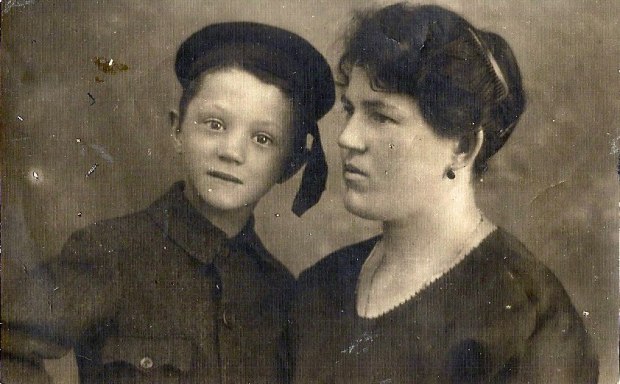
My Great Grandmother Augusta, and my Grandfather Dante. A postcard sent from Corva, Italy to my Great Grandfather, in the United States.


When we visited Italy and made a pilgrimage to Corva di Azzano Decimo, we walked on the street where she and my Grandfather walked. The house my Great Great Grandfather, Domenico Calderan, built- still stands on Via San Pietro in Piagno. And I was told that my Calderan relatives still live there, although I sadly was not able to meet any of them on my visit. Corva is a tiny town. A blip on the map that one might miss with a blink of an eye, but to me, walking through it’s main street, going into it’s two churches to light a candle, visiting it’s small cemetery and standing at the gravestones of my Great Grandparents, Great Aunts and Uncles… was the experience of a lifetime, which brought tears of my eyes.


To me, ancestral farming is the act of consciously fostering a deep connection with the past, through the foods and culinary traditions of one’s ancestors. A garden isn’t just a garden, but a piece of your history. Join me here on the blog as I venture on this journey. I’m slowly learning about the foods and flavors of my ancestry, which is dominantly Italian (Friulian), but which may take us on a journey to Switzerland, Cornwall or Scotland as well!

I will return to Corva and the Friuli Venezia Giulia region, again one day…


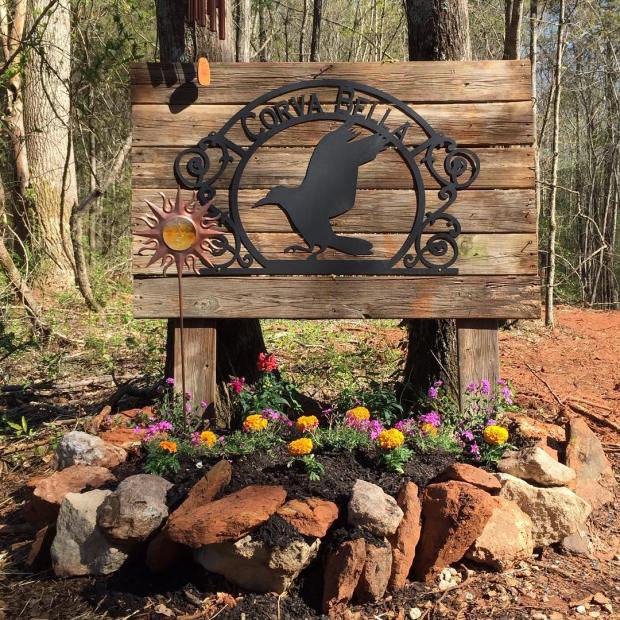
Welcome to Corva Bella!


12719163_1707304859526787_8853992377418273981_o

Corva Bella is a small family farm located in Upstate South Carolina, owned and operated by the Calderan Bell Family.

The name Corva Bella is a nod to my Grandparents and my Italian ancestry- my Grandfather was born in Corva, Friuli-Venezia Giulia, Italy. Corva is a tiny hamlet of Azzano Decimo, located in the province of Pordenone. The rich, fertile Meduna River valley marks this region in the most Northeastern province of Italy, an area famous for prosecco, polenta, gnocchi, and prosciutto. This land is dedicated to the farming of corn and fruit trees, as far as the eye can see. Corvids are birds such as crows, ravens, and magpies, and I believe that is the origin of the town name, as “corvo” is Italian for crow. In an area where the main crop is corn, I’m sure they are frequent visitors!

My Grandfather was an avid gardener. He grew yearly acres of corn, and the biggest heirloom tomatoes I’d ever seen. My Grandmother had a large organic garden that I helped her with. She taught me all about gardening, supplementing the soil, picking, pruning and preservation. We’d can and freeze vegetables, and make jellies, jams and pies with berries. These times were truly the best memories of my childhood.

Life in the Blue Ridge foothills of South Carolina is never boring. It’s one of the most beautiful places I’ve ever lived, and is no doubt my favorite. We currently have three rescue dogs (Stella, Luna and Siggy), a herd of Kune Kune pigs, a Karakachan livestock guardian dog, two barn cats (Artemis and Mr. Moustache), a flock of Easter Egger/Barred Plymouth Rock chickens, a flock of Lavender, Blue and Black Ameraucanas, two Silkies, and an assortment of Bantam Cochins.

We maintain a 3 season organic garden, which I will be substantially expanding in the Spring. I hope to provide vegetables, herbs and fruit for our several families, our animals, and eventually, more unique specialty vegetables and herbs of Italian origin to sell at local markets or direct to restaurants.