
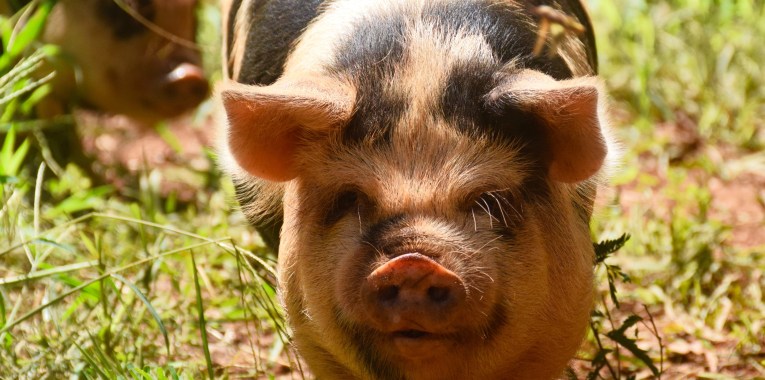
No doubt, we have a unique farm model compared to most. Our small farm is based on rare and heritage breed conservation, while most small farms are based on producing healthy & wholesome locally produced food. The rare breed heritage pork we produce is dependent upon how strict we are with our breeding program, and as such it also gives us the flexibility to “cull hard”. In other words, to be able to remove certain animals from our breeding program based on their quality and adherence to the breed standard (and our farm’s goals) without stress or anxiety, as we know the animal will be utilized for breed-specific pork, which will in turn contribute to the breed conservation effort. We tell our pork customers, “Every bite of our pork helps us to continue our work with conserving the breeds we love”, and this couldn’t be more true. Our weekly pork sales keep our animals fed and hayed, and our farm running. Conservation through utilization is crucial for rare & heritage breed animals, because without a use or purpose for them, there is no reason for farmers to continue working with them. For our pigs, that use is pork. This is difficult for many people to understand.
Conservation breeding programs aren’t easy, and they don’t exactly lend themselves to efficient food production (smaller pigs, longer grow out times versus large pigs that grow fast- you get the picture, what we do is very much a niche, premium product). They require one to continually make tough decisions and look upon the animals in their herd with a keen and unforgiving eye. One cannot be wearing “rose colored barn glasses”, in which they see every animal as one that should be registered and sold. It often helps to enlist a second set of eyes, as it can be difficult to evaluate your animals with a critical eye, and it does take time to learn the visual and comparative skills necessary to make such judgment calls. We are, and always will be- learning, and refining our gaze. How we see our pigs will change from year to year, as we learn more and continue gaining experience.
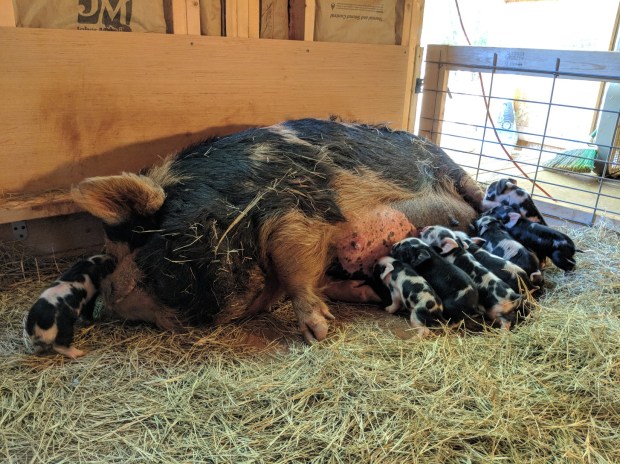
We are several years in to working with Kunekune pigs, and they are our true love, above and beyond all breeds of swine. In wanting to do our very best work with the breed, we’re constantly seeking to improve the quality of our herd, and conducting a yearly herd cull in which we thin our herd and shift our focus based on the previous year. Anyone can breed two registered Kunekune pigs together, produce offspring, sell them as registered piglets, and be part of conserving a breed… but when it comes to this breed’s future, that isn’t enough. The Kunekune breed needs breeders who are extremely serious about the breed, willing to cull hard and make sacrifices (even if it means culling a registered breeder they paid a lot of money for!) and having a meat cull program, whether on site or in partnership with another farm.
To us, Breed Conservation means the following, and more…
– Doing the best you can, with what you’ve started with. Not everyone is able to start off with the best of the best. In fact, most of us don’t start off this way.
– Becoming a member of your breed’s society or registry. Membership has it’s perks!
– Working with registered stock. Papers DO mean everything in terms of breed conservation efforts. Documenting pedigrees and having the option for others to utilize the genetics you are working hard to produce on your farm, is important. Without DNA testing & registration, this becomes futile. Last year, we sold four homestead pairs to people we knew personally, for pork production use. This year and from now on, no unregistered intact pigs are leaving our farm. We don’t believe that working with or selling unregistered stock helps with our breed conservation goals (or anyone’s). This is our viewpoint, it is a controversial topic and others may feel differently. For us, we see our area inundated with cheap and poor quality unregistered pigs. Many are crosses, but people are led to believe they have bought and are working with Kunekunes. Many buy these for pork production and end up with small pigs that never make weight, or there are temperament issues related to pigs not being pure Kunekune. Then there are the aesthetics of conformation, which is a whole other topic.
Did you buy unregistered pigs when you started off? Only in very rare cases will a breeder who sells unregistered pigs be willing to register them for you. Only the breeder can register and truth be told, some people just don’t want to do it even though it is quite easy. In many cases, your unregistered pig probably isn’t registration quality, anyway. If you bought unregistered pigs, you have two choices: use those pigs to produce bacon bits for your farm’s pork production OR process those pigs and start over again with registered stock.
– Learning anything and everything you can about the breed’s history. For Kunekune pigs, this involves learning the breed’s history in New Zealand, as well as in the UK. Becoming familiar with the import history and the imported pigs.
– Retaining pigs and building your own herd. If you’re utilizing your original seed stock over and over again, and not retaining offspring to breed into future generations, then you’re only at the tip of the iceberg of conservation breeding. Conservation breeding always looks to the future and for us, is about developing our farm’s own characteristic lines that suit the needs of our climate, environment and usage.
– Having a cull program. For us personally, this involves registering or retaining for observation, only the best piglets. All others are ear-marked for our meat herd. We make promoting and selling our pork a top priority so that we will always have a market for our product.
– Focusing on your own unique breeding program and pork production, that is geared towards the demographic for your area. We don’t focus on pet sales, at all. This is just a personal choice, as well as a controversial topic. Conservation breeding is not about trying to price fix or control what other breeders do, nor is it about trying to force other breeders to do/see things the way you do. We all have different situations and business models. This blog post is just our opinion- not an end-all, be-all for Kunekune conservation breeding. Everyone will have a different situation, price structure and manner in which they work. The ultimate “seal of approval” is the legacy you leave behind as a breeder. If you’re a bad breeder, people will stop working with you, period. The Kunekune community is small and close-knit. Honesty is always the best policy.
– Making hard decisions, every year. Looking hard at the animals in your herd and what they have produced and deciding who stays and who goes. And by who goes… I don’t mean selling a problem pig to an unsuspecting buyer. I mean pigs that haven’t produced as hoped. These are ones that should be utilized for pork. Last year we culled numerous registered pigs, that we had paid a good deal of money or traded time/labor for. It was painful to do it, but there is no way to make forward progress in a breeding program without culling ruthlessly and making sacrifices.
Yes, they equated to the most expensive pork chops ever… but our herd is better off for it. And each year as we thin the herd for improvement, we will be producing stronger pigs in the future based on those decisions. We just did our 2018 cull and have 8 registered breeders slated for meat production. Four of them were purchased from another breeder and could certainly be sold to someone else, but at this point they are worth more to us in terms of meat sales, and if they don’t meet our goals, why pass them forward to someone else? Another four of them were pigs we had retained and registered, but who didn’t make the cut. Culling hard is the only way we are going to meet our goals. It’s already taking us longer to do it because of pitfalls related to registration mishaps and working with pigs that ultimately didn’t meet our farm goals.
– Making plans for the future, identifying the traits that are weak (and strong) in your herd, and what steps you need to take to improve upon them. This could include retaining more pigs with certain type traits, or planning to add future foundation stock that has the strengths you need to carry on.
What conservation breeding means to us will surely change as we grow and progress in our own breeding program. What does it mean to you?

 Corva Bella Farm